GLASS CONDENSER About
What is Glass Heat Exchangers
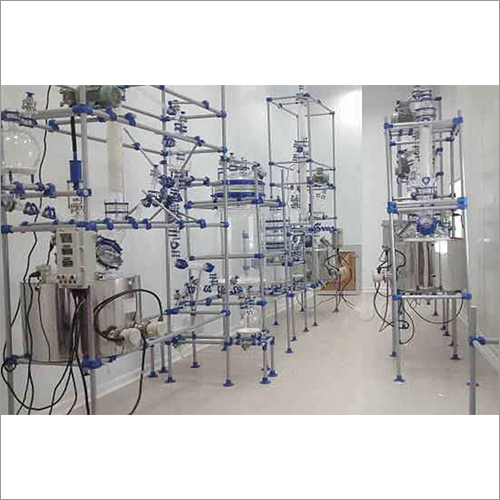
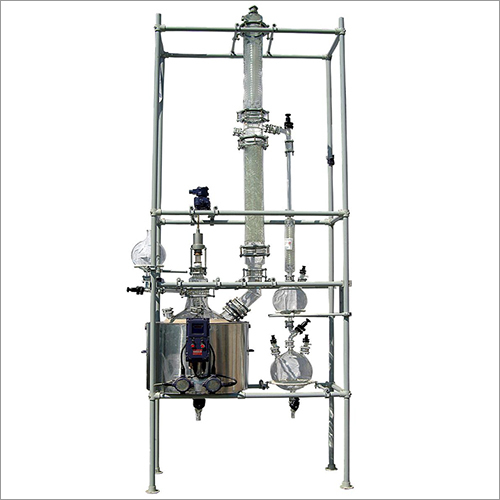
A glass heat exchanger is a device that transfers heat from one medium to another. For example, a hydraulic oil cooler will remove heat from hot oil using cold water or air. Alternatively, a Swimming Pool Heat Exchanger heats the pool water using hot water from a boiler or a solar-heated water circuit. Heat is transported via conduction through the exchanger materials that separate the mediums used. A shell and tube heat exchanger circulates fluids through and over tubes, whereas an air-cooled glass heat exchanger manufacturer circulates cool air through a core of fins to chill a liquid.
SALIENT FEATURES
- Provides universal corrosion resistance, making it a cost-effective alternative to expensive metals such as graphite, hastelloy, copper titanium, tantalum, and others.
- Smooth glass surfaces do not foul, allowing for excellent heat transfer.
- Installation flexibility (vertical or horizontal)
- Tubes can easily be replaced for repair and cleaning.
- Available in a diverse variety of HTAs.
- Easy installation owing to minimal weight.
- It is economical.
- Suitable for applications requiring big HTAs in restricted space.
Glass heat exchanger manufacturer are available in 2 basics designs
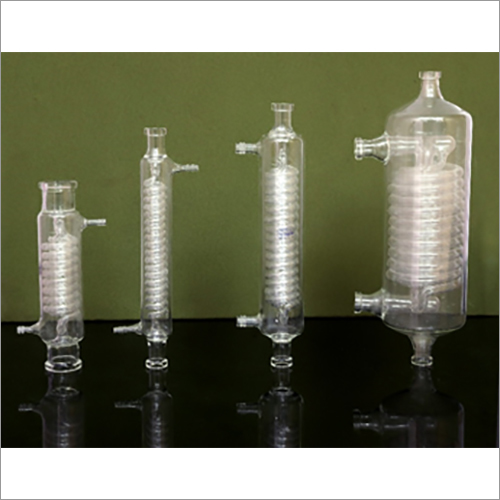
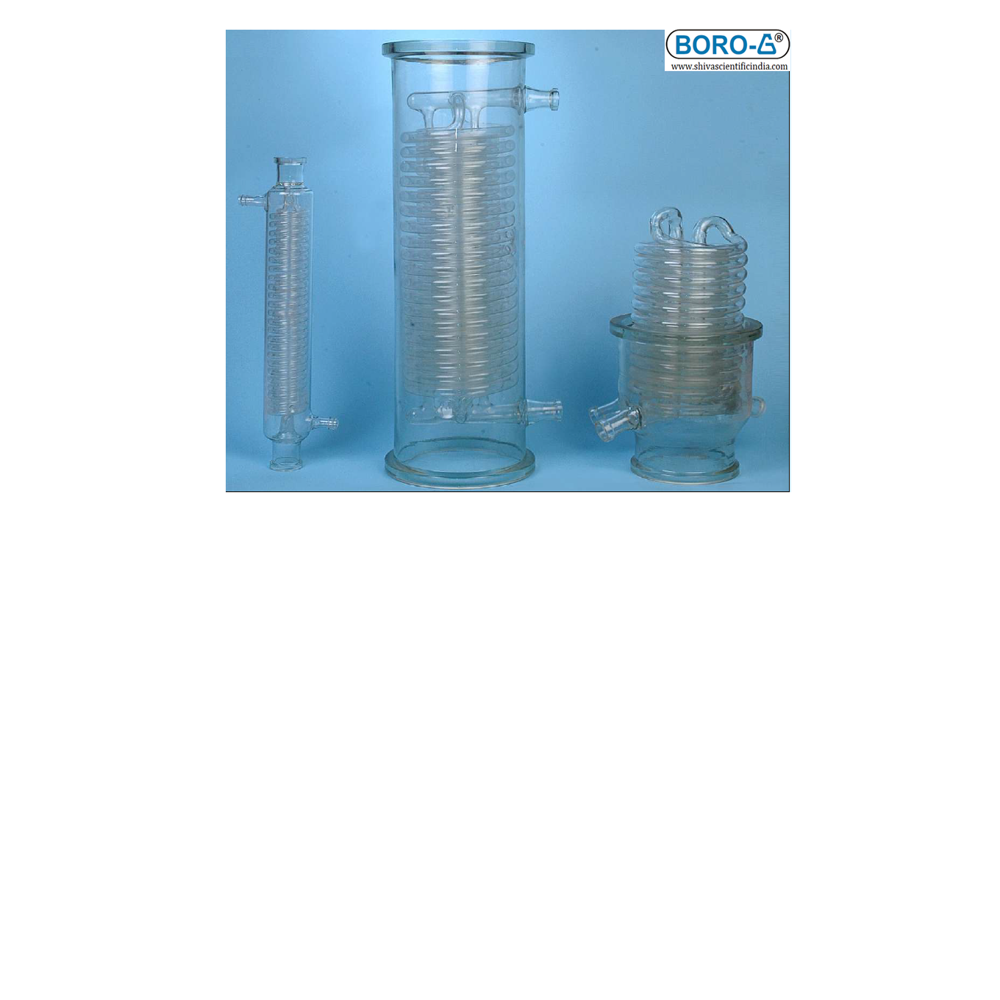
- Conventional Coil Type Condensers
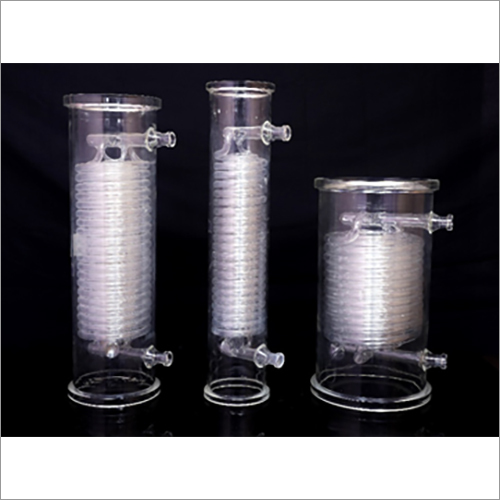
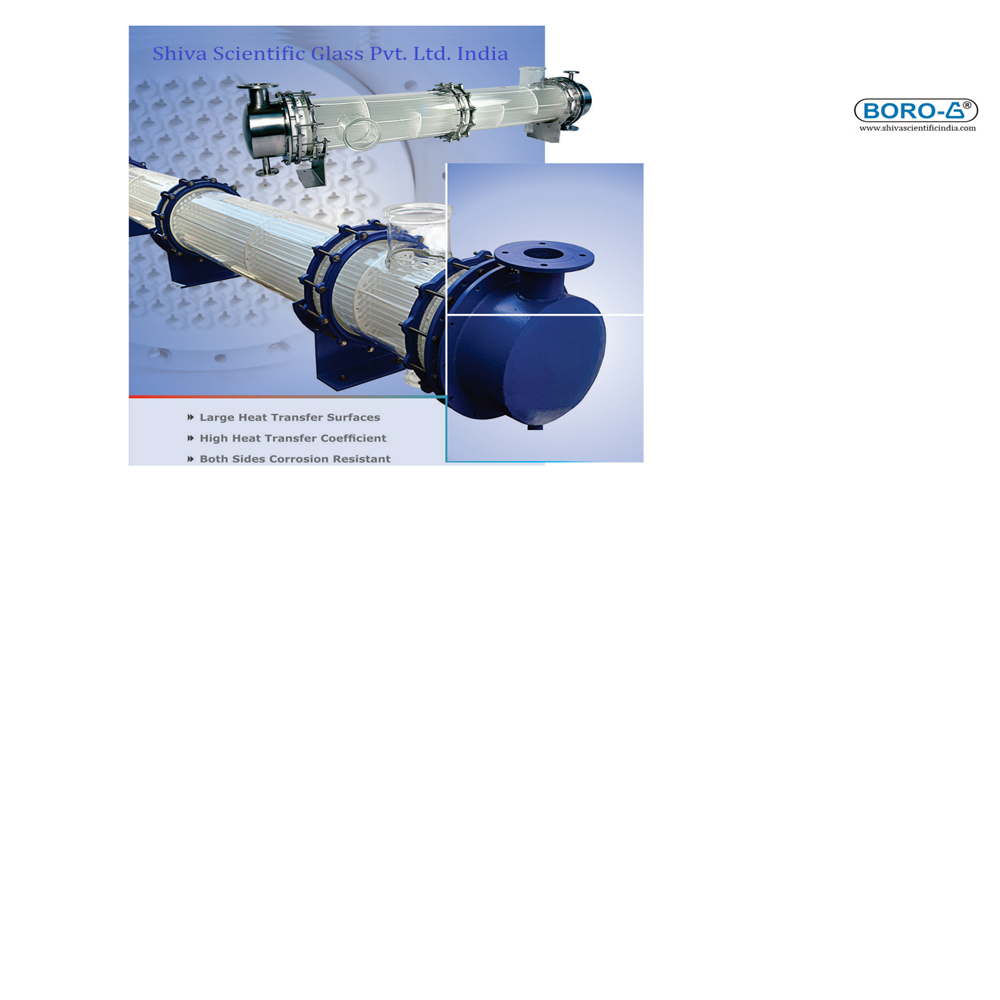
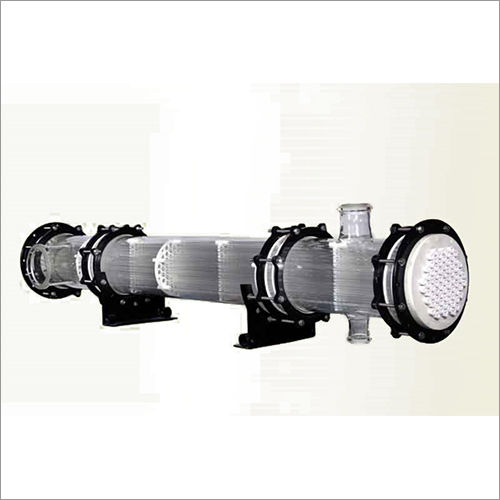
- Shell & Tube Type
Robust Borosilicate DesignCrafted from durable Borosilicate glass 3.3, our condensers offer outstanding resistance to corrosion and thermal shock, making them ideal for handling aggressive chemicals in demanding laboratory conditions. The robust construction ensures longevity and consistent performance, while the transparent body allows for easy visual monitoring.
Versatile Applications and Mounting OptionsThese glass condensers are suitable for a variety of laboratory procedures including distillation, reflux, and condensation. Offered in multiple designs-Liebig, Allihn, Graham, or coil-you can select the best fit for your needs. Both horizontal and vertical mounting are supported, ensuring flexibility in setup.
User-Friendly Cleaning and MaintenanceEase of disassembly and cleaning is built into every condenser. The simple structure allows you to quickly separate components for thorough washing, maintaining hygiene and extending product life. This ensures hassle-free maintenance during routine laboratory operations.
FAQ's of GLASS CONDENSER:
Q: How do I select the appropriate condenser type (Liebig, Allihn, Graham, or coil) for my application?
A: The choice depends on your process requirements. Liebig condensers suit general distillation, Allihn is ideal for high-efficiency reflux, Graham for improved cooling with internal coils, and coil types are used when maximum condensation is needed. Consult process specifics or contact us for guidance.
Q: What are the primary benefits of using Borosilicate glass 3.3 for condensers?
A: Borosilicate glass 3.3 provides superior resistance to acids, solvents, and thermal shock, ensuring safe operation under a range of temperatures (-20C to 200C) and pressures. Its transparency allows for easy visual monitoring of reactions, enhancing laboratory safety and process control.
Q: When should the condenser be cleaned, and what is the recommended process?
A: Clean the condenser after each use, especially when working with aggressive chemicals or viscous materials. Disassemble the parts, rinse thoroughly with a suitable solvent, and use a mild detergent if necessary. Allow all components to dry completely before reassembly.
Q: Where can these glass condensers be mounted, and are different mounting positions suitable for various applications?
A: The condensers are designed for both horizontal and vertical mounting, compatible with most standard laboratory setups. Choose the mounting option that best suits your process and available space to ensure optimal performance and ease of monitoring.
Q: What are the standard joint sizes available, and can custom joints be supplied?
A: Standard joint sizes include 24/29 and 19/26 ground glass joints. Custom ground glass joints can be manufactured to meet specific laboratory equipment requirements; contact us with your specifications for tailored solutions.
Q: How does the condenser ensure corrosion resistance during prolonged chemical exposure?
A: Thanks to the Borosilicate glass 3.3 construction, these condensers exhibit excellent resistance to corrosion from acids, alkalis, and solvents. The material maintains integrity and clarity even with prolonged exposure, supporting long-term, reliable laboratory operations.





 Get Latest Price




 Send Inquiry
