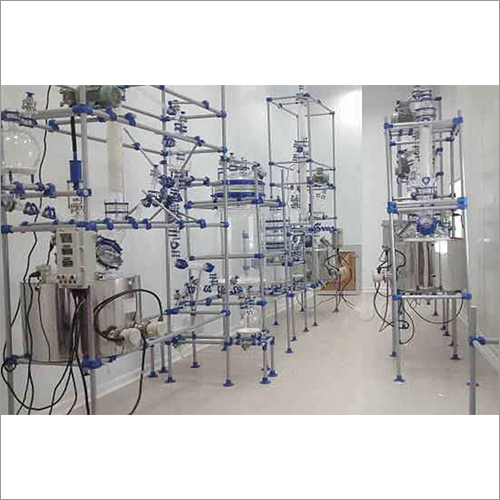
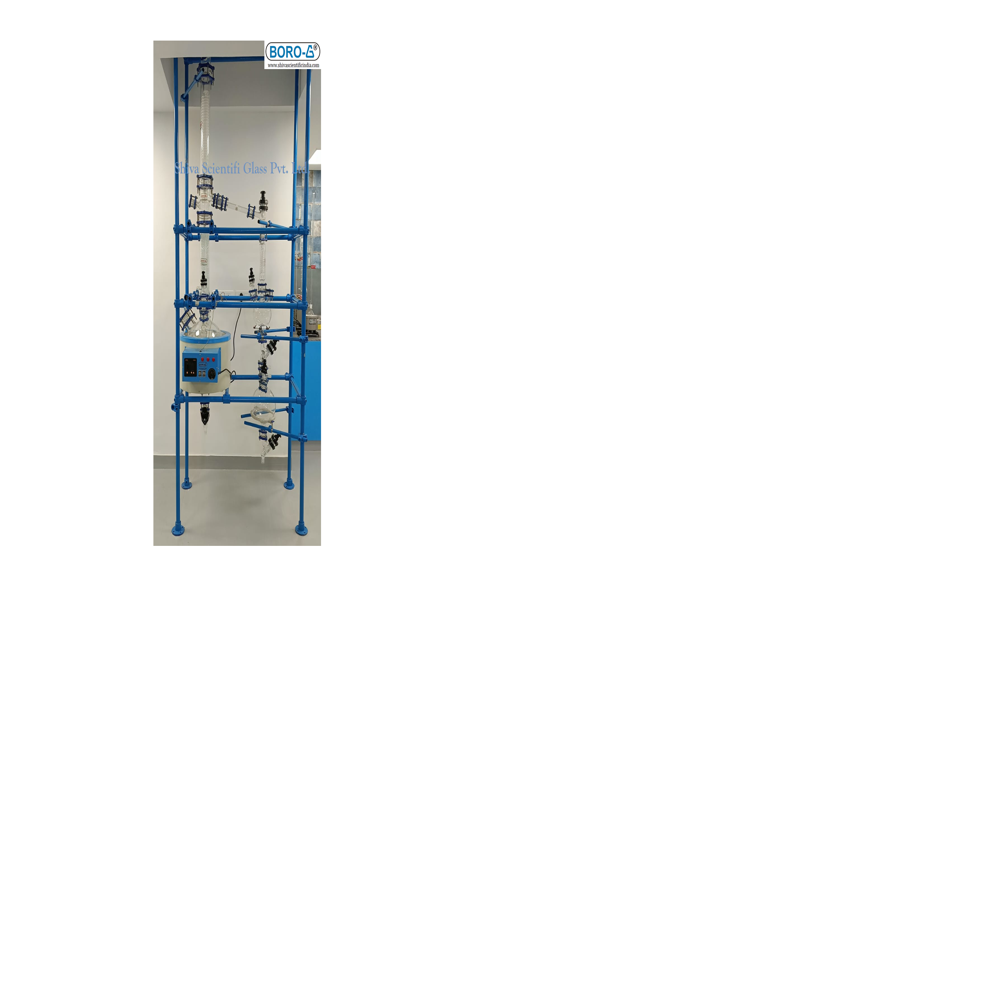
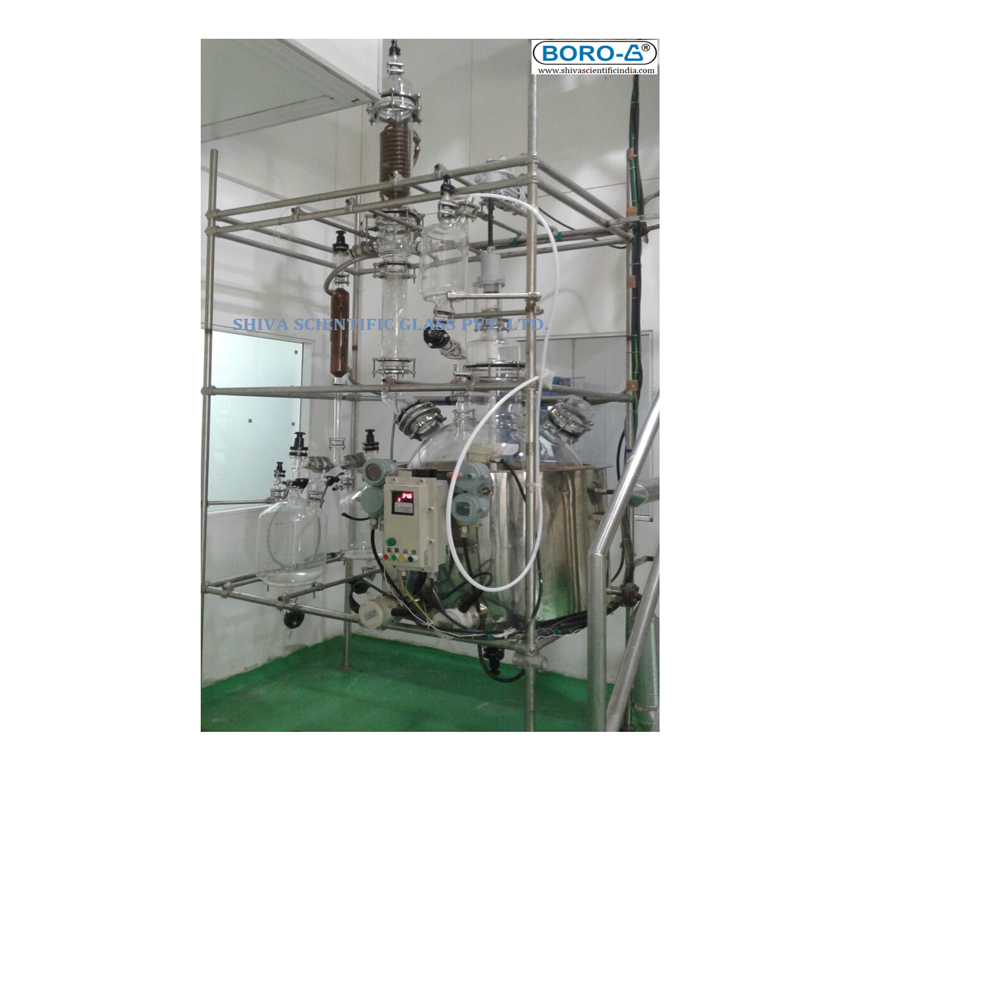
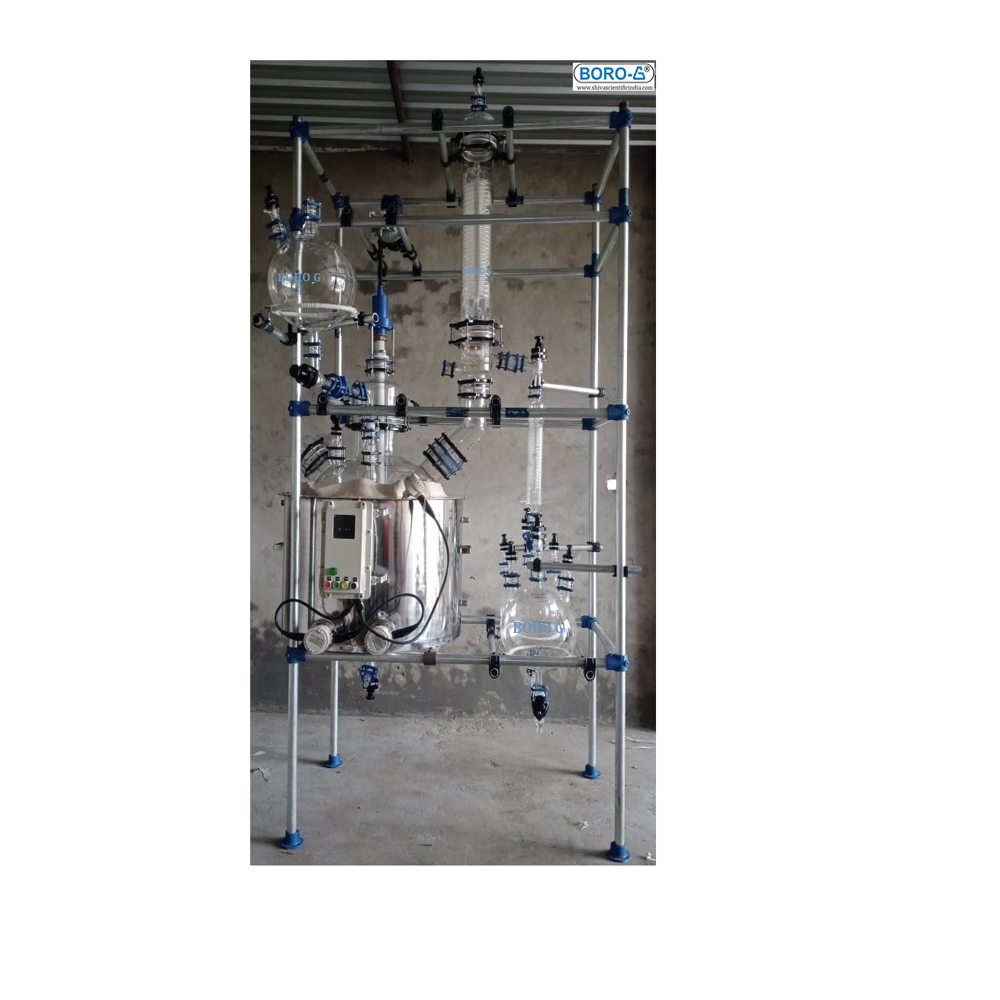
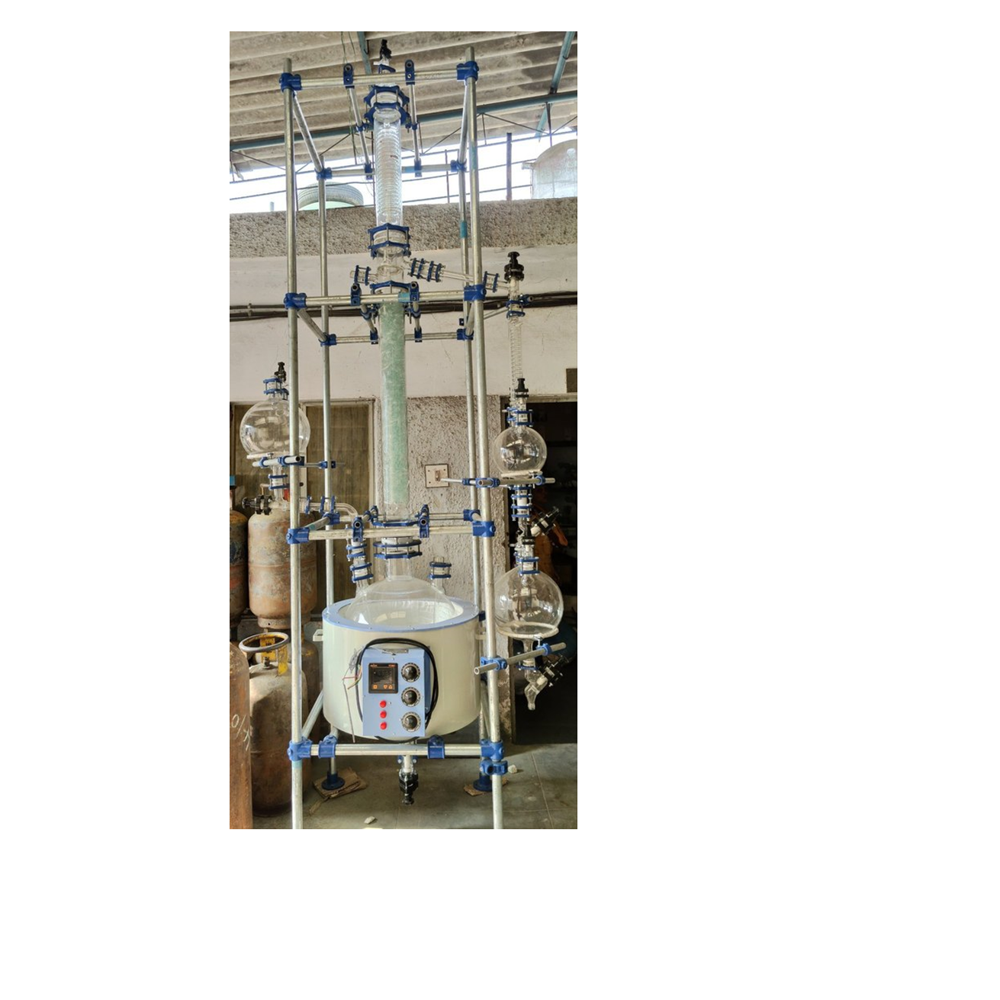
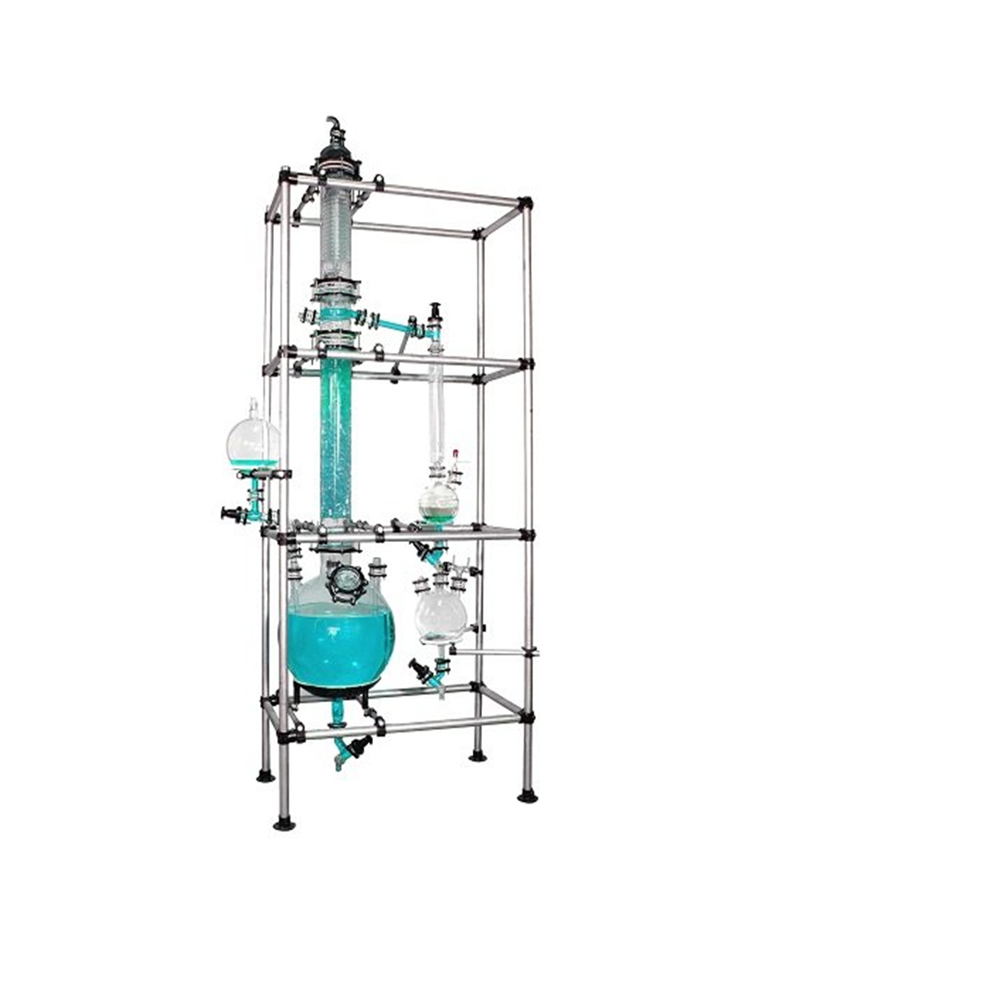
The Fractional Distillation Unit is a versatile and necessary tool used in the chemical industry to separate liquid solutions into their constituent parts. This sophisticated apparatus works on the principle of fractional distillation, which uses the differences in boiling points between the various compounds in the mixture. As the mixture is heated, the components with lower boiling points evaporate first and rise through a fractional column before condensing into liquid form. These condensed fractions are then collected, processed, or tested as required.
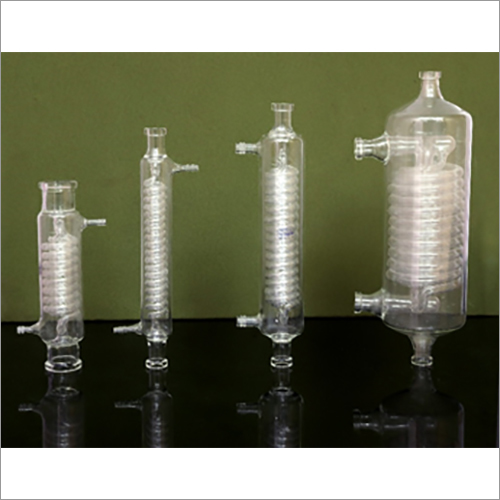
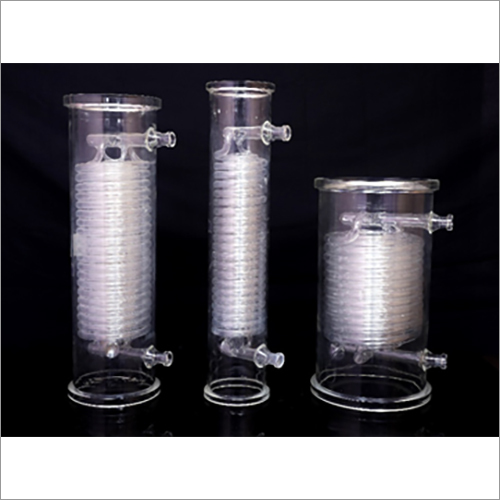
The Fractional Distillation Unit equipment has accurate temperature control mechanisms and efficient condensation systems to ensure flawless separation and maximum yield. Its applications include petroleum refining, medicine, and food preparation, all needing cleaning and separating liquids. The fractional distillation apparatus, with its durable design and consistent performance, contributes significantly to manufacturing high-quality products and scientific research advancement.
What is Fractional Distillation?
Fractional distillation is a process used to separate complex mixtures into their components. This method is particularly useful when the components have similar boiling points. Using a Fractional Distillation Unit can achieve a higher degree of separation and purity, making it an essential tool for various industries, including pharmaceuticals, petrochemicals, and research laboratories.
Working of Fractional Distillation Unit
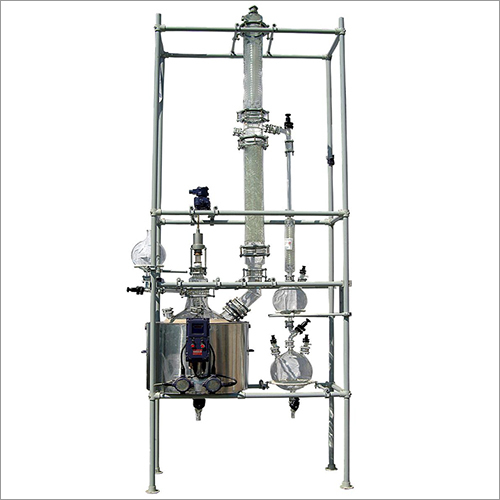
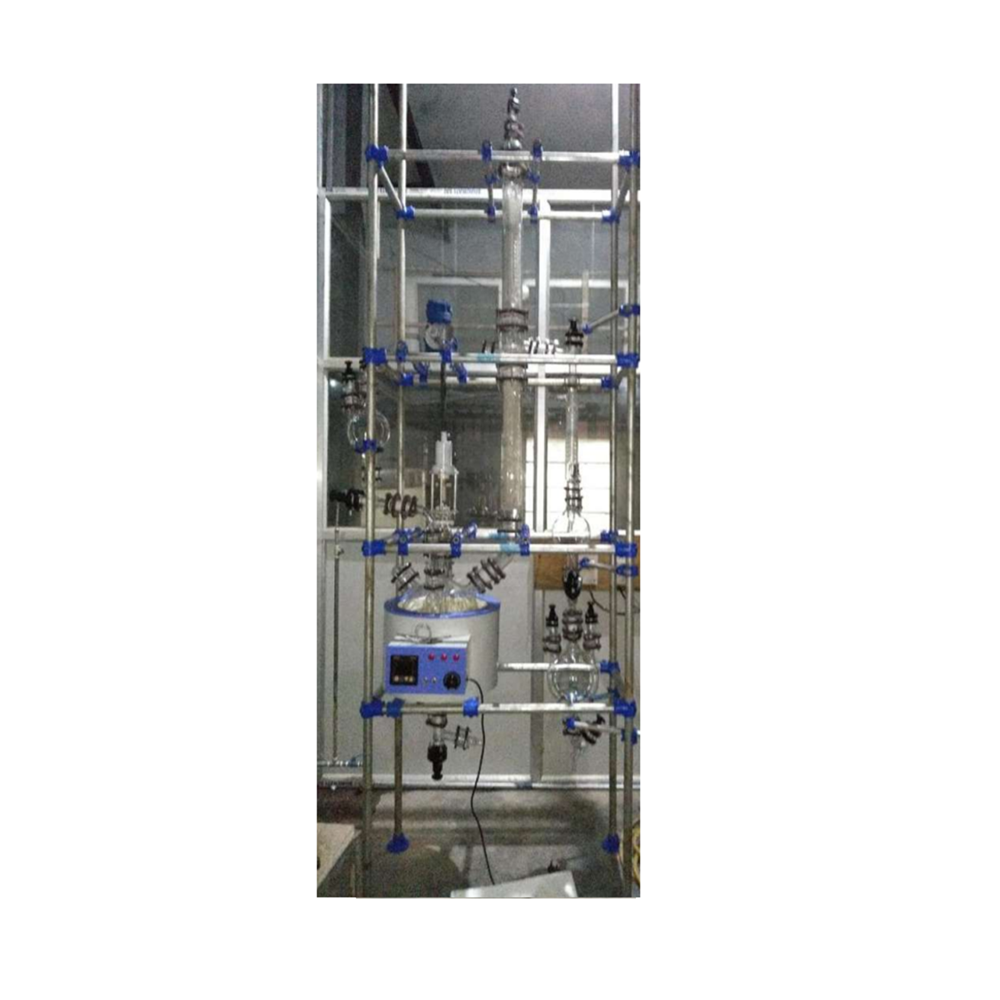
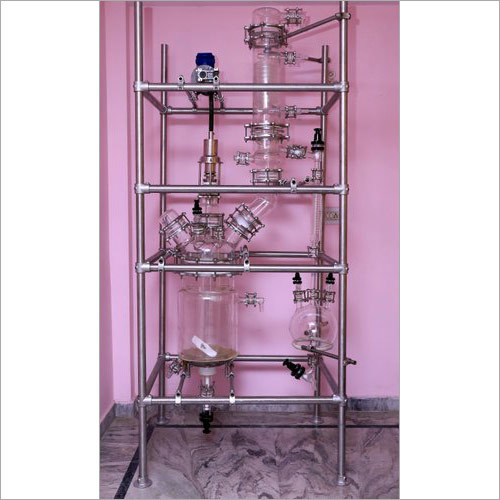
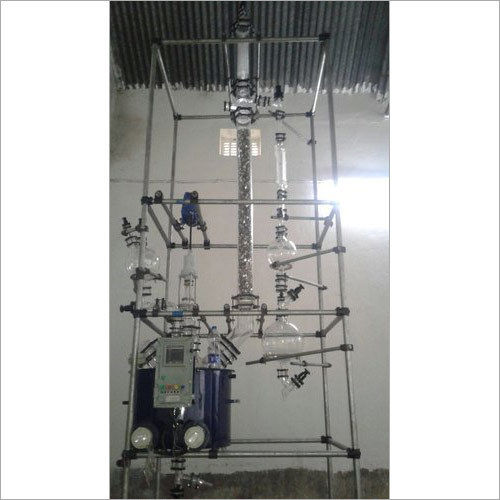
Fractional distillation is a compact batch-type unit featuring a re-boiler consisting of a vessel mounted in a heating bath with a packed column above. The vapors from the top are condensed and can be re-fluxed as needed.
The top product is sub-cooled and collected in receivers, while the bottom product is drained from the re-boiler through a drain valve.
Fractional distillation units are available in vessel sizes of 20L, 50L, 100L, 200L, 300L, and 500L and may operate at both air pressure and full vacuum.
Manufactured using borosilicate glass (3.3 mm thickness) and a durable stainless steel stand, this unit is designed for longevity and consistent performance. The asbestos-free thermal insulation and grounded plug ensure safety, while its compact, benchtop form makes it convenient for various laboratory environments.
The inclusion of Raschig rings or borosilicate glass beads as column packing material maximizes contact area between vapor and liquid, resulting in more efficient separation during fractional distillation. This makes the unit highly effective for separating complex mixtures into their components.
This unit is equipped with overheat protection, spill guard, and manual control for secure and easy operation. The analog temperature gauge provides accurate temperature readings, ensuring precise control during the distillation process.
FAQ's of FRACTIONAL DISTILLATION UNIT:
Q: How does the column packing material improve the efficiency of the fractional distillation unit?
A: Raschig rings or borosilicate glass beads provide a large surface area for vapor and liquid to interact within the distillation column, promoting better heat exchange and leading to more effective separation of components in a liquid mixture.
Q: What types of applications is this fractional distillation unit suitable for?
A: This unit is designed for separating and purifying liquid mixtures in laboratory settings, making it ideal for educational laboratories, research and development centers, and chemical analysis tasks.
Q: When should I use a batch operation mode for distillation?
A: Batch operation is preferred when processing a fixed quantity of liquid for separation and purification, such as in small-scale research or teaching experiments, where flexibility and frequent changes of sample are required.
Q: Where can this distillation unit be installed or placed?
A: The unit is intended for benchtop installation, allowing it to be conveniently used in laboratory environments with suitable space and access to water supply and power.
Q: What safety features are incorporated in the design?
A: To ensure safe operation, the unit comes with overheat protection, a spill guard, an asbestos-free thermal insulation layer, and a grounded electric plug.
Q: How is temperature controlled and monitored during operation?
A: Temperature is managed using a manual control valve or knob, while an analog temperature gauge provides real-time monitoring with an accuracy of 1C.
Q: What are the benefits of using borosilicate glass in the construction of the distillation unit?
A: Borosilicate glass is chosen for its high resistance to thermal shock, chemical corrosion, and its ability to withstand temperatures up to 250C, ensuring reliability and durability during rigorous laboratory distillation processes.





 Get Latest Price




 Send Inquiry
